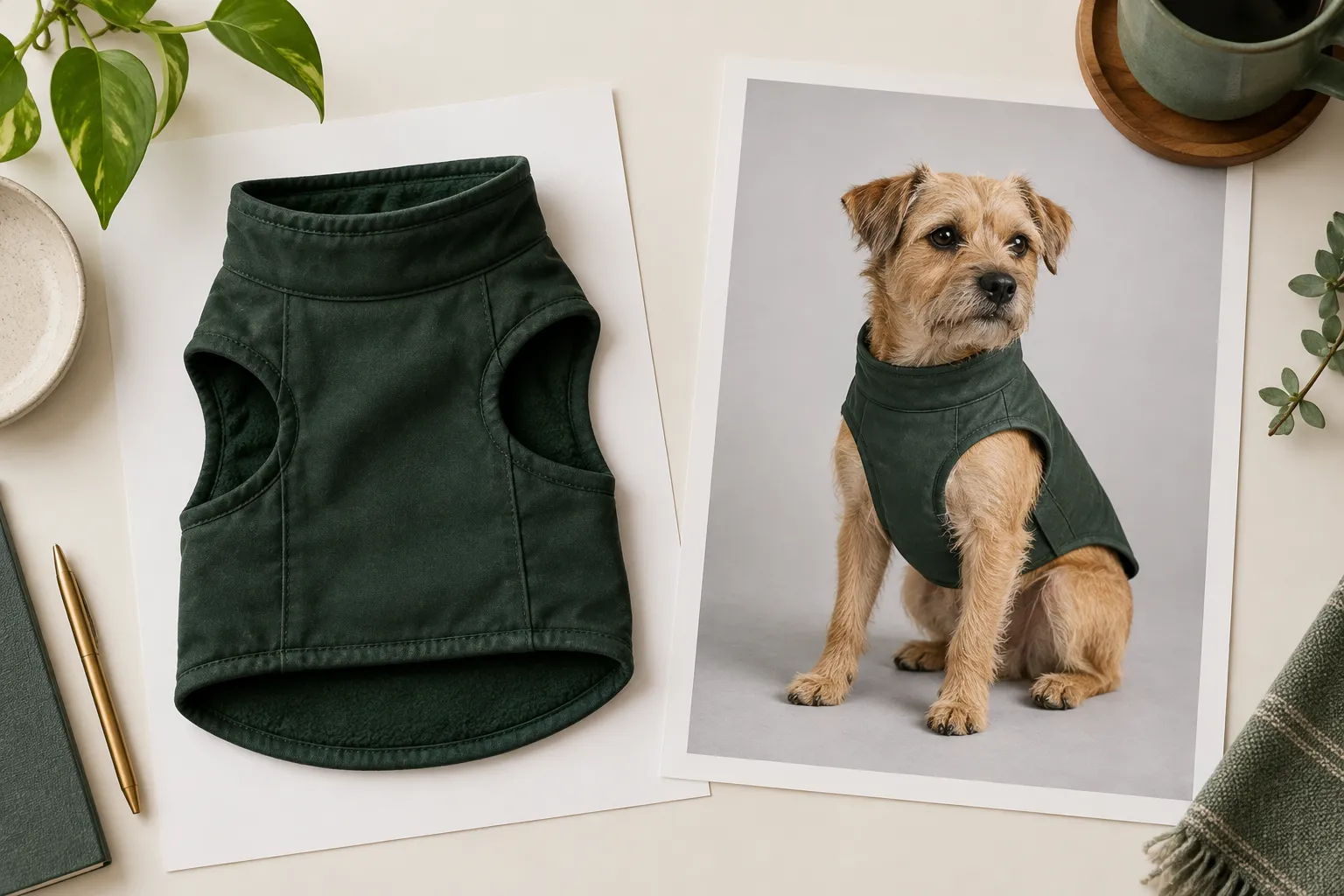
The dog looks good. The vest looks good. The background is almost white. Someone renames the export main-image-final.
One decision has quietly gone missing: is this the right kind of image for that Amazon placement?
A studio look can make an asset feel ready before its job is clear. For a pet-apparel seller, it helps to write two briefs before producing anything: the main product image and the supporting worn view.
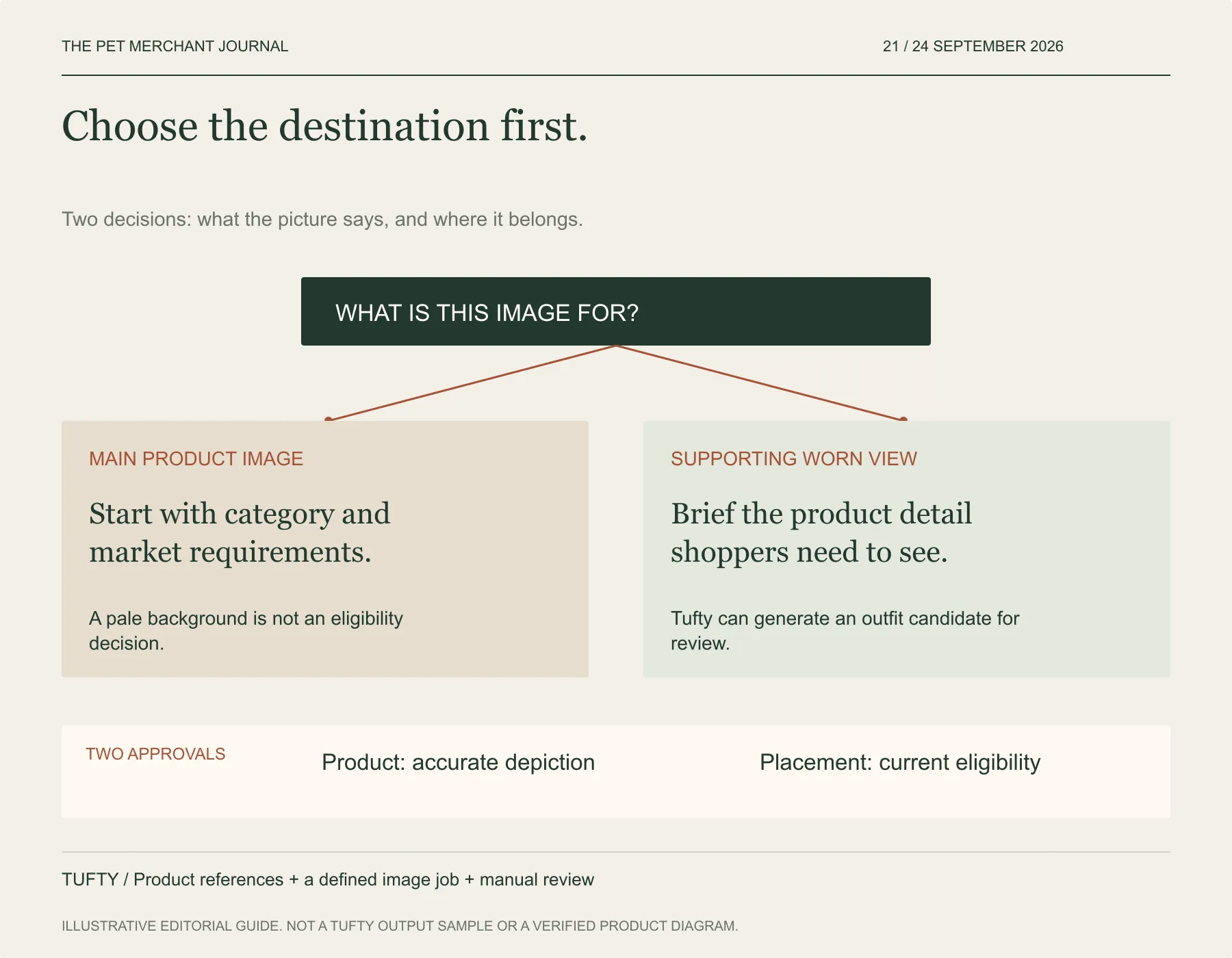
Original editorial framework. Original illustrative workflow. Check the actual item and intended publishing placement.
Brief the role, not just the background
The main-image brief should start with the current requirements for your product category and selling market. Specify the actual item, the required presentation and the applicable technical conditions. Amazon distinguishes main-image requirements from other image uses; a pale background alone does not establish compliance.
The worn-view brief can be more specific about the shopper's question: show where the vest ends along the back, keep the neckline visible, and avoid obscuring the opening. It still needs to represent the product accurately and qualify for its chosen position.
Keep those briefs separate even when the final assets share the same visual style. Otherwise, “make it cleaner” becomes a substitute for deciding whether the image belongs there.
Where the outfit tool fits
Our tool, Tufty, pairs an actual product photograph with a pet reference to generate an outfit candidate. That is useful when your missing asset is a clear worn presentation of the supplied garment.
Choose a pet reference that exposes the area you want to explain. Add a short note about the real hem, neckline and closure. Then compare the candidate with the physical product or reliable source photographs.
Tufty's current documented outfit workflow favors a neutral studio presentation. That appearance is not an Amazon approval, and this generation step does not automatically deliver every asset your main-image brief requires.
Two approvals on one small card
Write Product and Placement on the review record. Under Product, note whether the garment's construction and appearance agree with the source. Under Placement, record where the asset will be used and which requirements you checked.
An image can pass one review and fail the other. A strong supporting candidate may have a useful destination even when it is unsuitable as the main image.
For the next SKU, name the destination before naming the file “final.” That small habit keeps a visually finished asset from becoming an unfinished publishing decision.