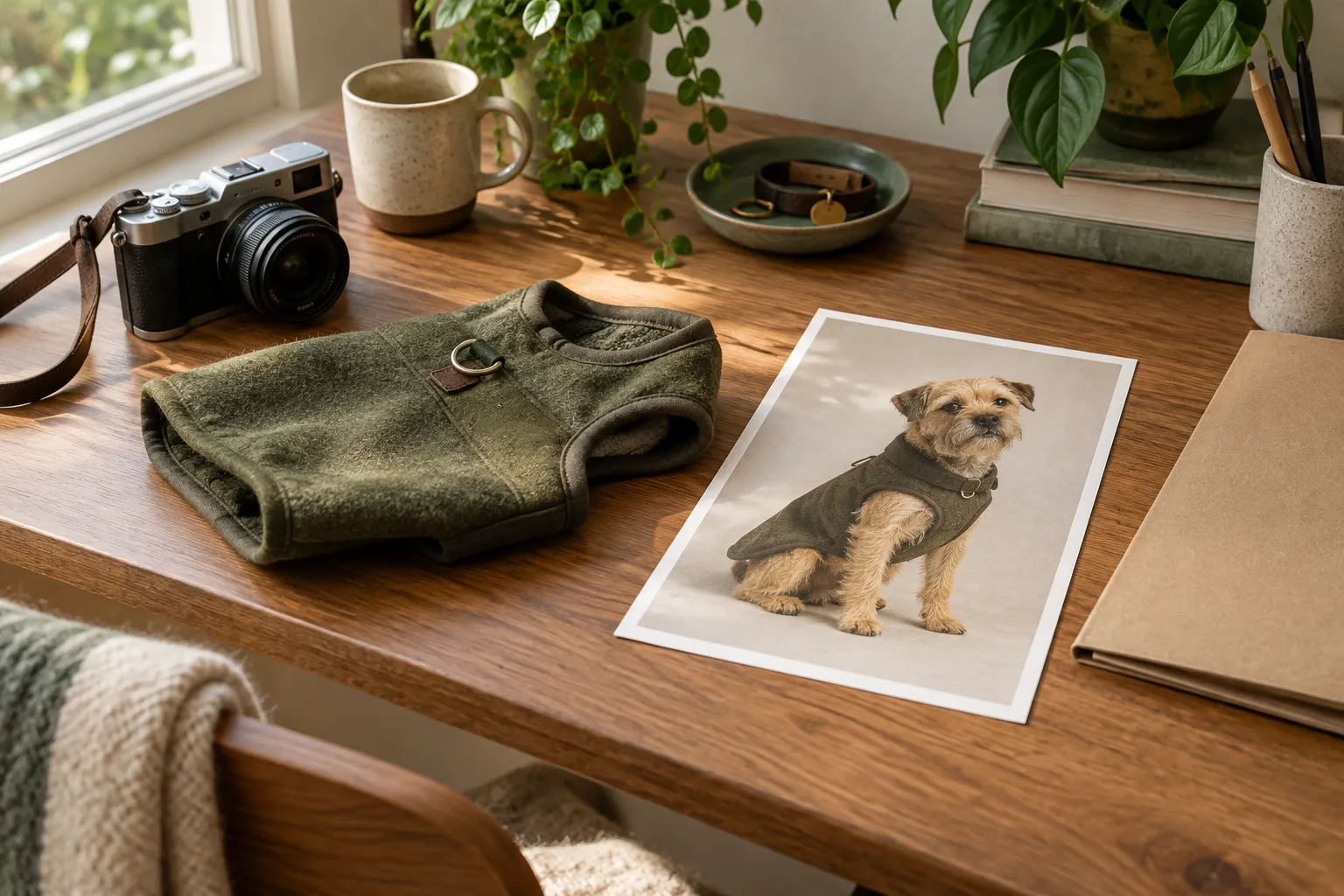
A creator receives a polished clip of a dog wearing your vest. The accompanying note says, “Something like this—talk about how much your dog loves it.”
The image can support the first half of that request. It cannot supply the experience in the second.
For a TikTok Shop pet brand, a better handoff gives the creator useful visual direction while leaving genuine observations to the person who actually handles the product.
A brief the creator can use
Start with one reviewed asset and a short memo. Here is an illustrative version for a moss vest:
Asset: synthetic styling reference, not a customer wearing test. Product: the current moss vest shown in the supplied source photos. Visual intention: keep the neckline and full back panel readable. To capture: the actual closure and the real product being handled. Experience: use only observations you can truthfully make after working with the item.
Attach the factual product information the creator needs. Keep measurements, materials and included items tied to your real documentation. If something still needs checking, mark it as open rather than letting the image answer it by implication.
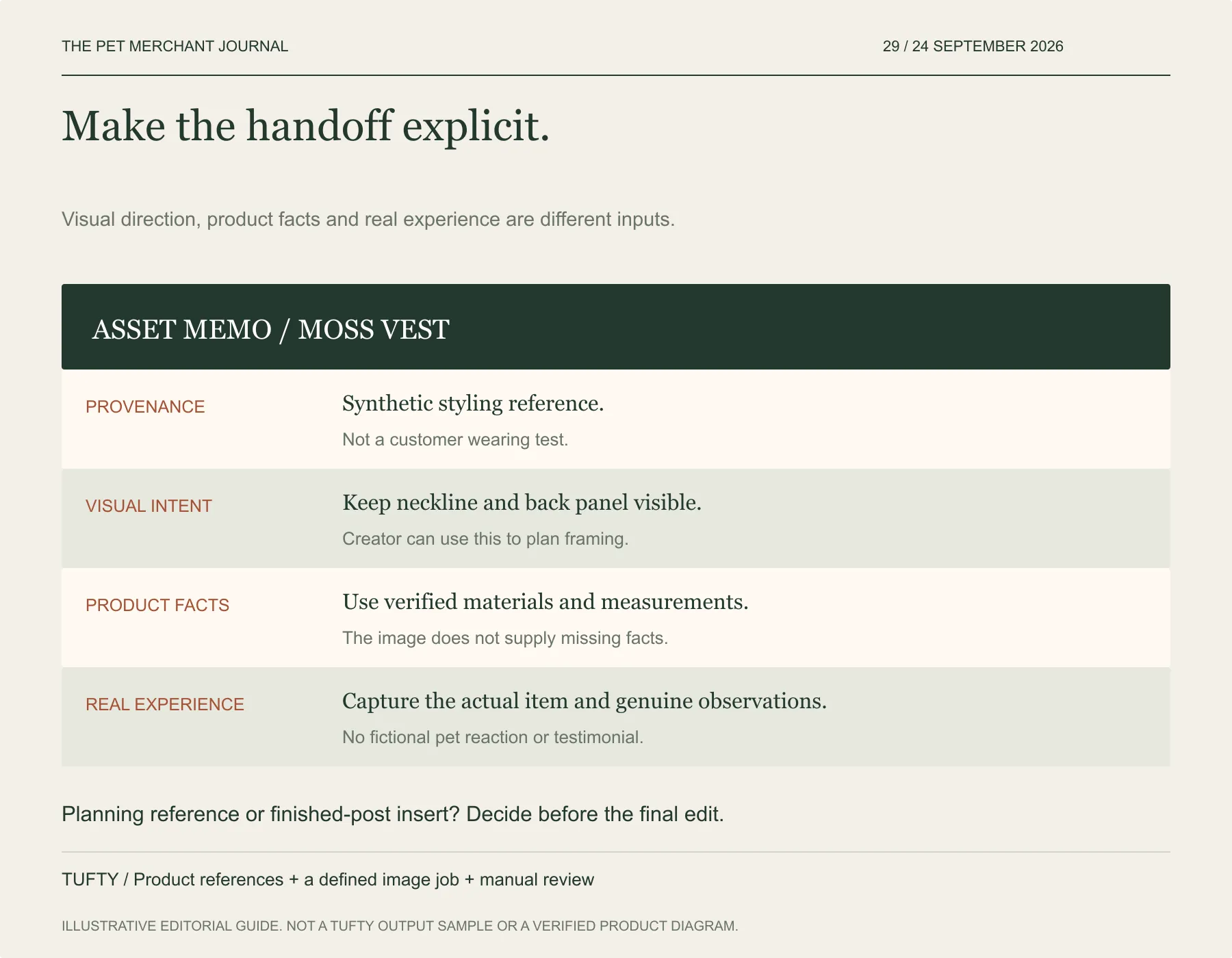
Original editorial framework. Original illustrative workflow. Check the actual item and intended publishing placement.
Create the reference with a narrow purpose
Our tool, Tufty, can generate an outfit candidate from the actual garment and a suitable pet reference. That gives you a concrete way to discuss framing and product visibility with a creator. If movement helps explain the visual direction, you can develop an image-to-video candidate from a reviewed still and inspect the whole result before sharing it.
Neither asset supplies a real pet's reaction, physical fit or use experience. Keep that distinction in the filename or memo so the context survives the handoff.
Decide how the asset will be used
A reference for planning a real shoot and a synthetic insert in the finished post need different treatment. For a planning reference, state which composition decisions are useful. For a proposed insert, agree on the visible context and appropriate AI and commercial disclosures before the final edit.
TikTok Shop's US guidance requires truthful AI product representation and prohibits misleading impersonation. Requirements can differ by market and placement, so use the rules that apply to the actual post.
Send a small, clear package rather than ten unlabeled options. The useful result is that the creator knows what the image establishes, what they should film, and what only their actual experience can say.