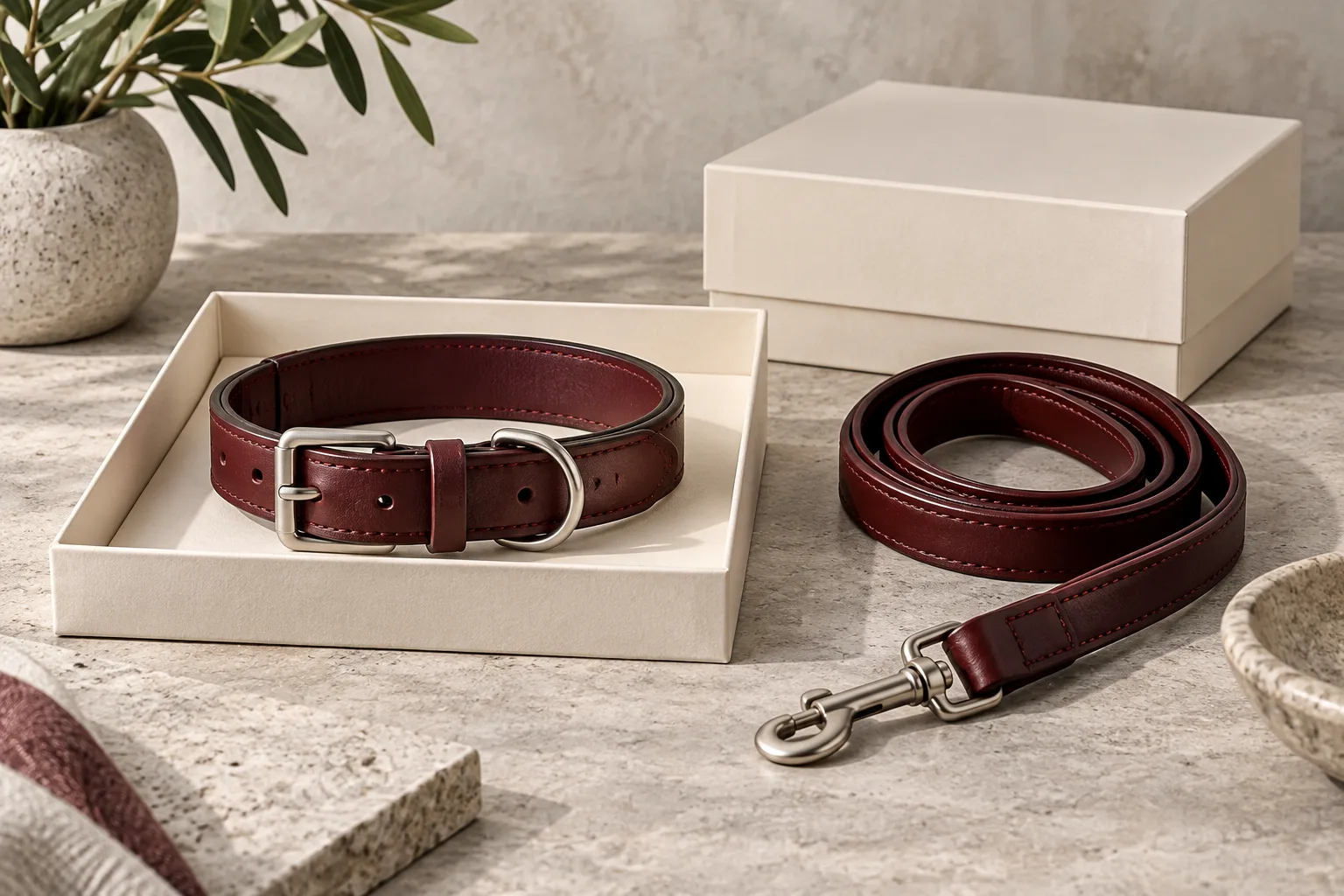
Cover the headline on your next ad mockup. Hide the logo and the price. Ask someone what they think they would receive if they bought the product.
If they say “the matching set” while your warehouse would pack one collar, the creative review has just become useful.
The mismatch can exist without a single false sentence. A collar and leash share the same color, sit together in the foreground, and receive equal lighting. A neat gift box appears beside them. The composition has done the selling, including a little more selling than the offer can support.
This matters because a click carries an expectation into the next page. The shopper should be able to continue the same buying decision after arriving there.
Amazon Ads' moderation guidance explicitly calls for the product, pricing, and claims in an ad to agree with its landing page. It also emphasizes accurate product representation. The practical review below is our proposed way to apply that principle to pet accessories, rather than a substitute for the requirements of an individual ad format.
Name the offer before styling it.
Imagine a fictional plum dog collar sold individually. A matching leash is available as a separate purchase. The collar arrives in a simple sleeve, not the presentation box used during the shoot.
Write the offer in one plain sentence: “One adjustable plum collar; leash sold separately.” That sentence belongs in the working brief even if the final ad uses different approved wording.
Next, assign a role to everything in frame. The collar is the offered product. The dog demonstrates its appearance. The leash gives styling context. The box implies packaging. Those last two roles need particular attention because buyers could interpret them as included items.
A prop does not become harmless because the creative team knows it is a prop. The shopper has only the image.
Choose a destination that can keep the promise.
Amazon's Sponsored Brands documentation describes destinations including a Brand Store or product detail page, with campaign setup depending on the chosen format and goal. Check the options in your actual campaign.
For the single-collar offer, a relevant product page can continue a specific product decision. For a genuine collection campaign, a well-organized Store page may make sense. But a collection destination still needs to make the separately sold pieces clear; “shop the look” does not turn them into a bundle.
Before approving the link, follow the click yourself. Check what appears first, which product the call to action identifies, and whether the advertised item is easy to locate. A technically valid destination can still require the shopper to reconstruct the offer.
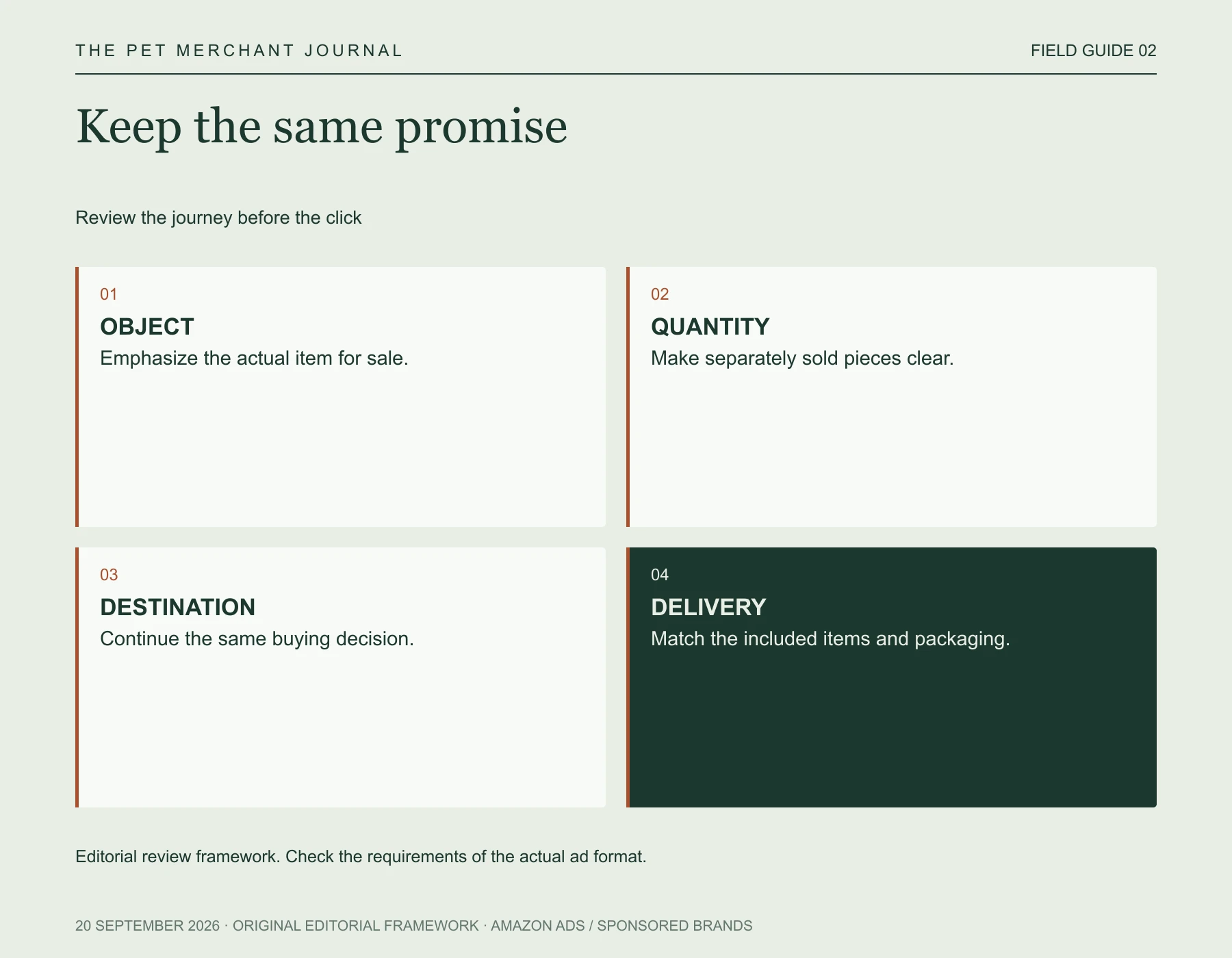
Original editorial framework. Editorial review framework. Check the requirements of the actual ad format.
Use four checks during the handoff:
| Check | Question for the collar campaign |
|---|---|
| Object | Does the visual emphasize the collar being sold? |
| Quantity | Could the scene imply a collar-and-leash set? |
| Destination | Does the click lead to the decision the ad introduced? |
| Delivery | Do the shown packaging and included pieces match the order? |
Resolve ambiguity in the composition.
One solution is to photograph the collar on the dog and reserve the leash pairing for a clearly identified collection scene. Another is to show the collar prominently while making the separately sold accessory's role clear through permitted creative elements and the destination.
The exact execution depends on the format. Do not assume every placement allows added text inside an image. A tiny disclaimer is also a weak remedy when the dominant visual tells a different story.
For visual exploration in our project, Tufty, we would begin with this same offer brief. AI pet styling concepts can suggest a mood or composition; the actual items and packaging determine what the campaign may promise.
Keep the promise intact after launch.
Give someone responsibility for checking the journey when the offer changes. A new package, an unavailable accessory, or a retired collection can make yesterday's coherent ad confusing today.
Read click and purchase measures together with the questions buyers ask, while accounting for other explanations such as price and delivery. A gap between clicks and orders does not prove misleading creative. It tells you where to investigate, rather than which department to blame.
Lifestyle context still has a place. A collar floating alone cannot show every reason someone might enjoy owning it. The aim is to make the setting add meaning without adding imaginary contents to the parcel.
Run the covered-headline exercise again after the revision. The strongest answer is ordinary and specific: “I would receive that collar.”
Now the image and the order are making the same promise.