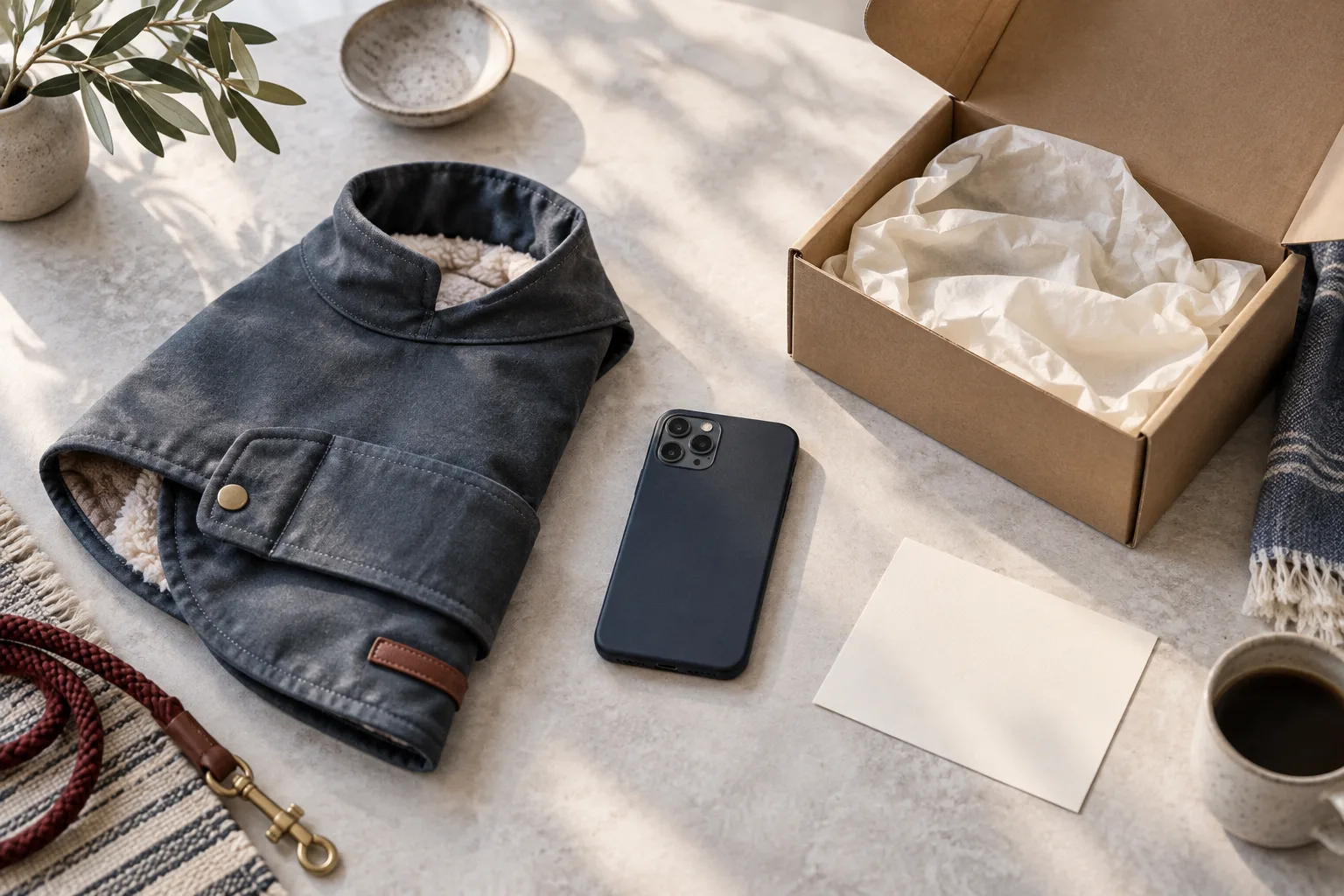
A beautiful product page can lead to an awkward purchase.
The coat looks right. The size seems right. Then the delivery charge appears, the arrival estimate becomes unclear, or a payment attempt fails. The customer leaves. Back at the merchant's desk, the proposed response is a new set of lifestyle images.
Those images may be worth making. First, establish which part of the journey needs attention.
An unfinished purchase is an observed event. Its cause usually requires more work.
Locate the uncertainty
Separate visitors who viewed the product, customers who added it to a cart, those who began checkout, and completed orders. Keep the definitions, reporting period, and channel consistent. An abandoned-checkout list is not a list of everyone who considered buying, and a total count alone does not explain why someone stopped.
Use the evidence available in your actual setup. Shopify's current guidance for its newer abandoned-checkout automation explains how to review payment events in a checkout's timeline. A failed payment deserves investigation on its own terms. It should not automatically become a brief for a stronger emotional hook.
Now consider a fictional product: a slate dog coat, offered in three sizes, with a separate shipping charge calculated for the destination. Imagine an internal review finds that the product page describes dispatch timing, while a buyer has to reach checkout to understand the available delivery service.
That is an identified information gap. It is not proof that the gap caused every unfinished checkout.
The distinction protects the quality of the next decision. You can improve the explanation because it is incomplete, then observe what happens without rewriting uncertainty as a success story.
Keep facts and guesses in different columns
A useful review note can be very short:
| Evidence you actually have | Question still open | Next check |
|---|---|---|
| A payment event records a failure | What prevented this attempt? | Inspect the recorded message and payment setup |
| Delivery cost appears late in a test journey | Was that cost unexpected to buyers? | Review earlier shipping explanations and customer questions |
| A customer asks when the coat will arrive | Which timing promise was unclear? | Compare product copy, delivery options, and order messaging |
| A checkout remains incomplete | Did the person leave, pause, or return another way? | Review available records without assigning a motive |
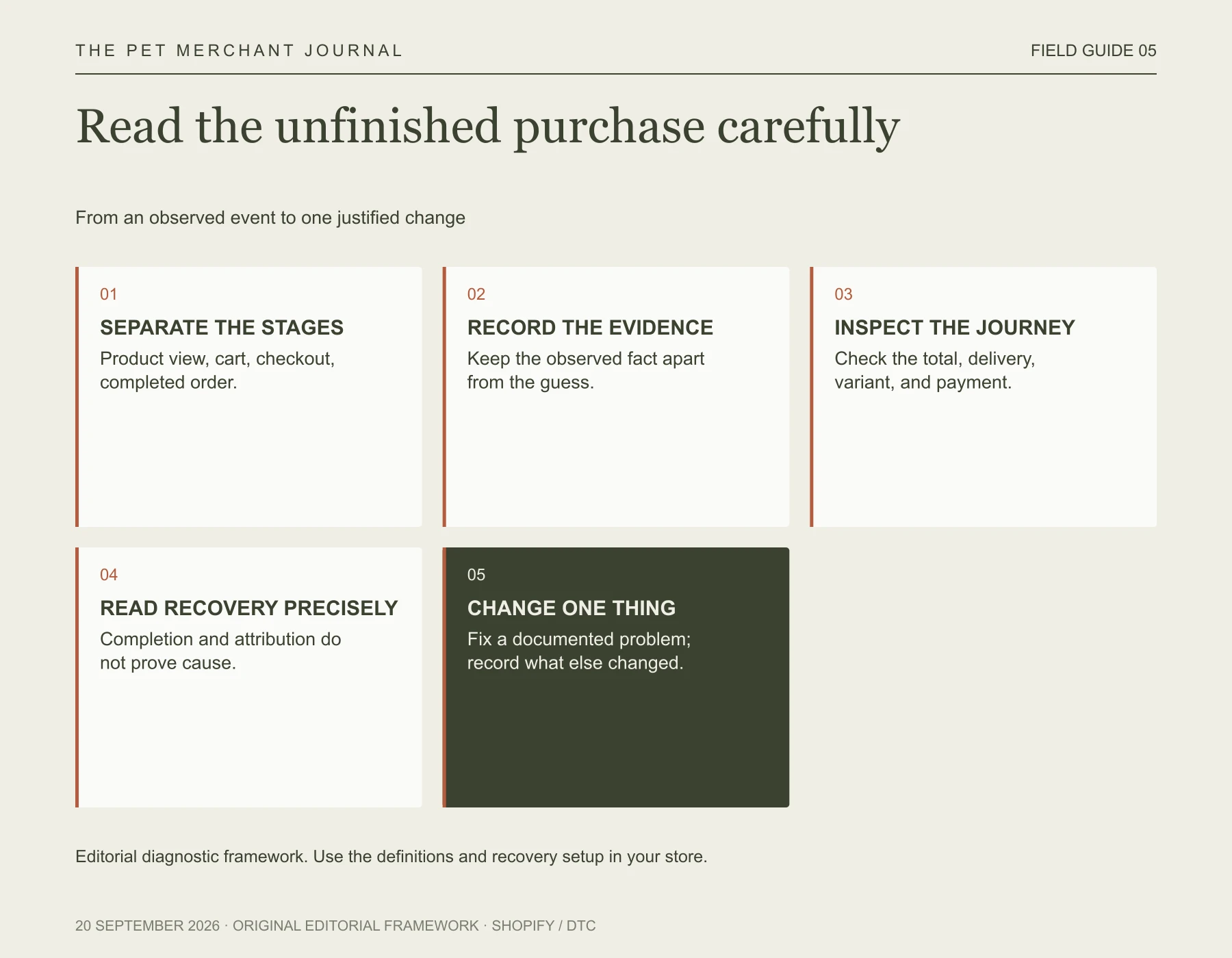
Original editorial framework. Editorial diagnostic framework. Use the definitions and recovery setup in your store.
The first column should survive a challenge from a colleague. “Shipping is too expensive” belongs in the second column until you have evidence for it. “This destination displayed a shipping charge of X” belongs in the first.
Walk through the purchase on a phone using the relevant product variant and destination. Record where the total, delivery information, selected size, and payment choices become clear. Use the appropriate testing arrangements for the store; the goal is to inspect the journey, not contaminate reporting with unexplained orders.
Read “recovered” precisely
Shopify's newer automation documentation says that, after an email is sent, a checkout can be marked recovered when the customer completes the order either through the email link or independently. That status therefore does not, by itself, establish that the message caused the purchase.
There are three different questions: did the order finish, which interaction received reporting credit, and would the order have happened without the intervention?
Shopify marketing reports support different attribution models, including first click, last click, and linear allocation. These distribute credit according to defined rules. The practical implication is that changing the rule can change the reported story without changing the underlying purchase. An attribution report is useful evidence about recorded interactions; it is not a controlled test of additional sales.
A sensible counterpoint is that a small merchant may not have enough volume for a rigorous experiment. That does not make observation worthless. It makes careful wording more valuable. Write “completion increased after this change” when that is what you know. Record changes to traffic, availability, pricing, and promotions that could also matter.
Make the next change specific
Choose one documented problem and name its owner. A misleading arrival statement needs an operations-informed correction. A confusing size selector needs a product-page fix. A weak photograph needs a better photograph.
Recovery messages can help someone return to an unfinished decision. Check the recovery experience and recipient settings your store actually uses before changing the workflow. Avoid making a discount the automatic answer to every departure.
The best next creative brief may still be a shoot. It should begin with a discovered customer question, rather than a checkout number you have asked the photography to explain.