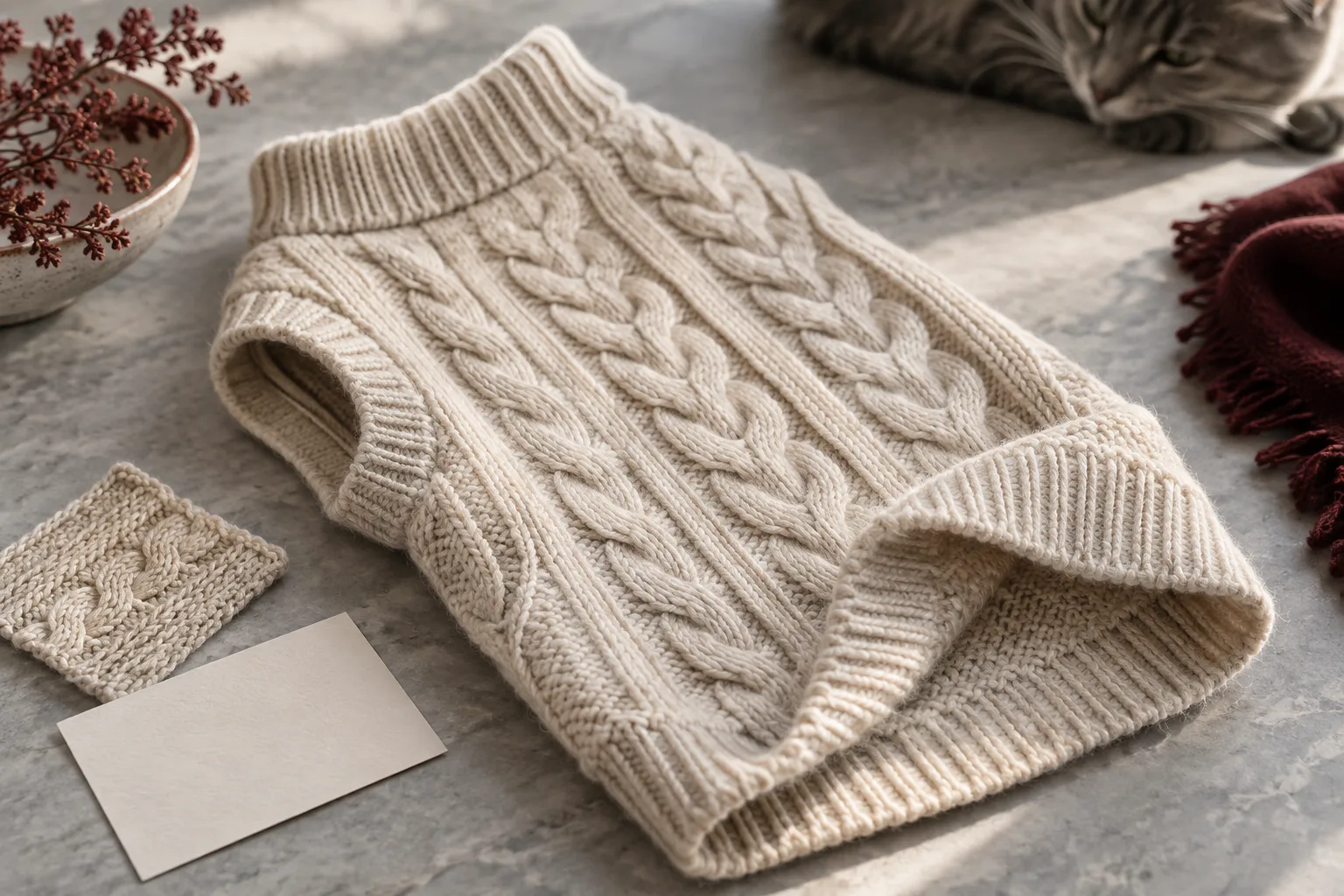
“Oatmeal cable knit” can describe the color and construction of a dog sweater.
It does not tell a shopper what the yarn is made of.
Yet an image can quietly fill that gap. Soft side lighting, a fuzzy surface, a rustic setting, and a wool-like texture may combine into a material impression that the product information never actually established.
When AI enters the image workflow, that impression deserves deliberate attention. A request to make knitwear look richer can produce more than richer lighting. It can imply a denser knit, a different surface, or an interior that the real sweater does not have.
The commercial question is specific: what will the customer expect to touch when the parcel arrives?
Begin with the facts that a picture cannot establish
Imagine a fictional oatmeal dog sweater with a cable pattern, ribbed openings, and no separate lining. For this exercise, its product documentation and garment label consistently identify the fiber as 100% acrylic. The merchant has inspected the corresponding sample and confirmed the construction.
A photograph can show the cable arrangement. It can show the reverse side. It cannot prove the fiber percentage merely by looking convincing.
Keep the composition statement tied to the relevant product documentation and current SKU. If the supplier sheet, label, and purchase specification disagree, resolve that conflict before rewriting the listing. Choosing the most appealing description from three inconsistent records only moves the uncertainty to the customer.
The aim is a usable product record: what the garment is made of, how it is constructed, what care information is supported, and which sample or production version those facts describe.
Give each descriptive word a job
For our fictional sweater, “oatmeal” identifies the color. “Cable knit” describes the visible structure. “Acrylic” identifies the stated fiber. “Unlined” explains the absence of a separate inner layer.
Those words can sit together without competing. The listing does not become more premium by letting “woolly” stand in for material information or calling the reverse side a lining because it looks soft in a photograph.
Google Merchant Center makes a similar distinction in its material attribute guidance: material describes the main fabric or substance, while color, size, and pattern belong in their own attributes. That is a useful merchandising discipline even before a product enters a feed.
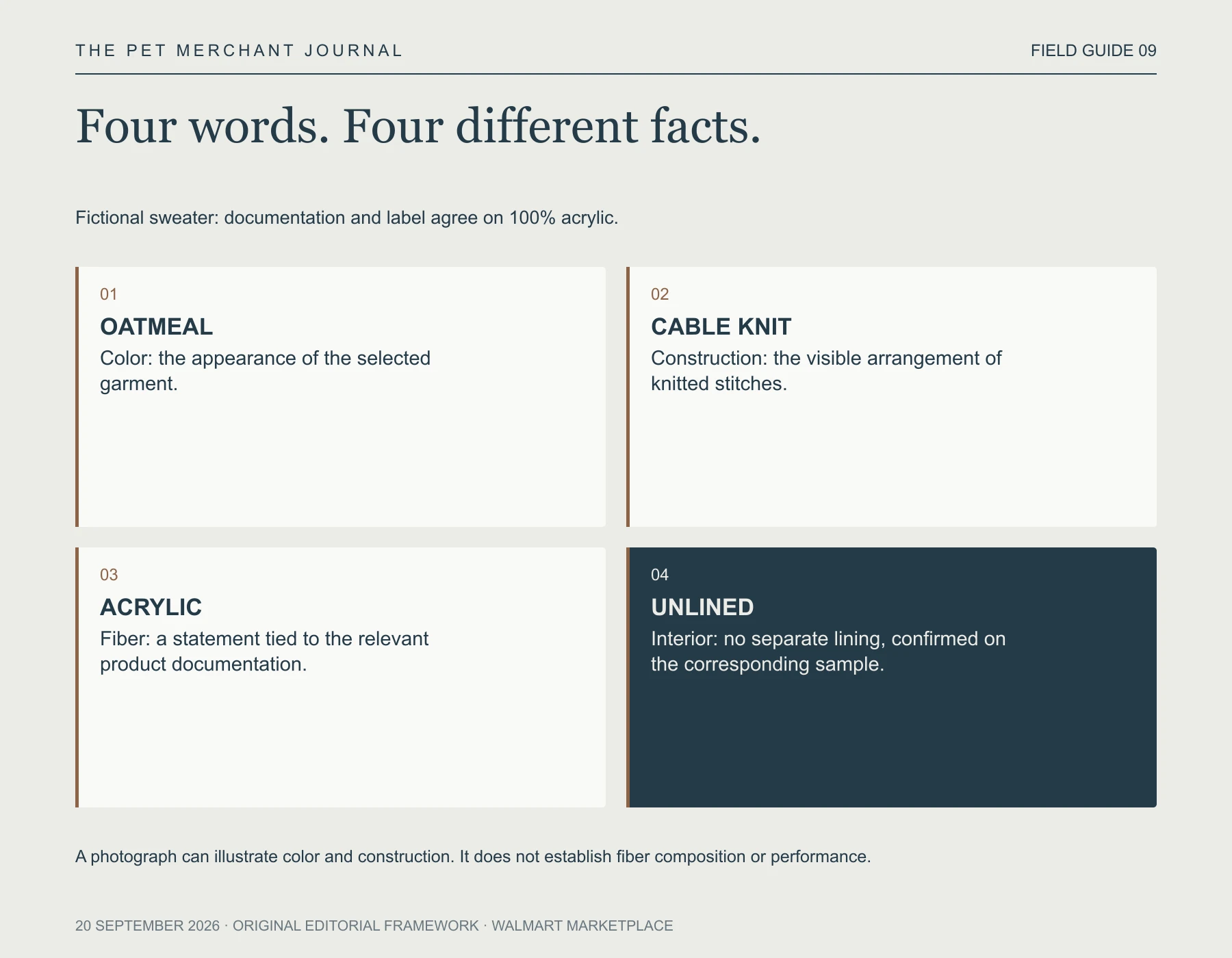
Original editorial framework. A photograph can illustrate color and construction. It does not establish fiber composition or performance.
Show the part customers cannot feel
Build the images around the uncertainty that matters for this sweater. Show the actual surface at a useful distance, then a closer view with lighting that reveals the stitches. Turn back an opening so the shopper can see the reverse and understand that there is no separate lining.
Keep the detail view in proportion. An extreme macro can make ordinary yarn look monumental. Pair it with a normal product view so the customer can judge scale.
If the product bends or folds easily, a simple photograph of the actual garment resting in a natural fold may communicate more than a broad adjective. It still does not establish warmth, durability, or how every dog will experience the fabric.
Walmart's US textile guidance calls for accurate fiber information and substantiated performance claims. For a merchant's creative team, the practical implication is to keep an attractive surface impression separate from claims that need their own evidence.
Brief the edit with the real garment beside it
Suppose the campaign concept places the sweater in an autumn interior. Approve the setting and light against the real sample, then examine the garment itself. Did the surface become much fuzzier? Did a thin cuff turn into a thick padded edge? Did the open neckline acquire a fleece interior?
These changes are commercially meaningful even when the color and overall silhouette remain recognizable. They tell a different material story.
Ask for the observed texture and construction to remain consistent. If the image workflow cannot preserve them convincingly, use an approved photograph for the close-up and reserve the concept for internal creative exploration.
There is still room for mood. Warm light, a thoughtful background, and a well-composed pet portrait can make an acrylic sweater desirable on its own terms. A merchant does not need to imply a different fiber to give the product an appealing presentation.
Let the expectation guide the final review
Read the title, attributes, descriptive copy, and gallery together. Then finish this sentence: “A customer ordering this sweater would reasonably expect…”
If the answer includes wool, a separate lining, or exceptional cold-weather performance that the product facts do not support, revisit the words and images that created that impression.
Material accuracy is useful because it gives the right customer a clearer choice. The strongest knitwear story is one the physical sweater can finish when the customer opens the package.