Version B is ahead. Someone shares a screenshot. The designer is pleased, the merchant wants to roll it out, and the next collection is already being briefed around the new approach.
But the experiment is still running.
The tempting mistake is turning an early ranking into a business rule: close-ups beat lifestyle photography, short titles beat long titles, technical copy beats emotional copy. One result rarely earns a conclusion that broad. An unfinished result earns even less.
The useful question is narrower: did this change help customers choose this product under the conditions of this test?
Amazon's Manage Your Experiments randomly splits listing visitors between content versions. Access requires a Professional account, the relevant Brand Representative role, and an enrolled brand; individual products also need sufficient recent traffic. Eligibility should be checked in Seller Central before a team builds a testing calendar around the tool.
Write the decision before designing the challenger.
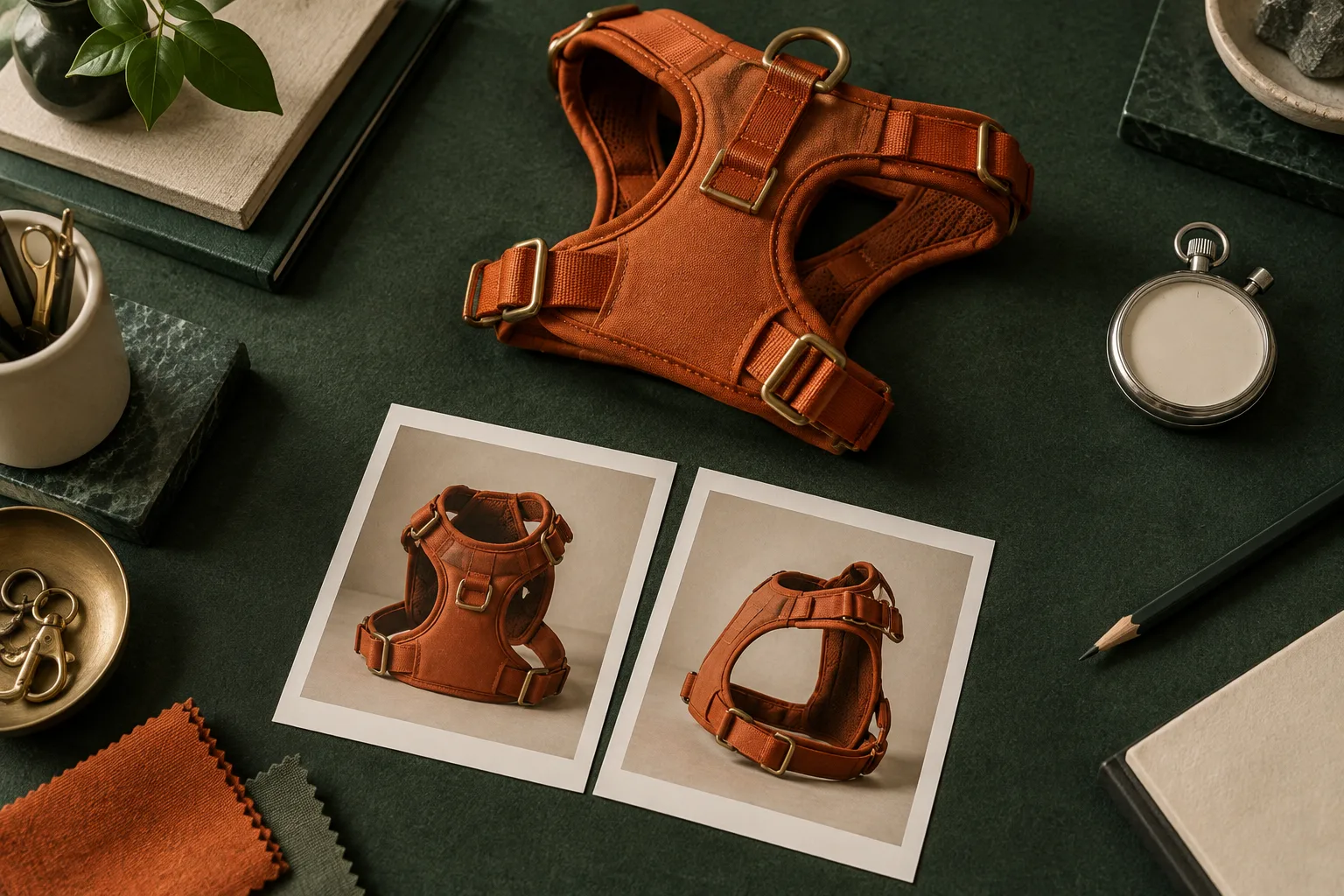
Consider an illustrative rust dog harness with two adjustment points and a side buckle. Its current A+ content opens with an outdoor scene. The proposed alternative opens with a clear explanation of how the harness goes on.
“Make it more premium” is a weak hypothesis. It allows almost any attractive design to count as success.
A useful hypothesis would be: “Leading with the fastening sequence will make this harness easier to evaluate, improving the selected purchase metric compared with our current introduction.”
Now the team knows why Version B exists. It also knows which interpretation would be too broad. Even if B wins, the result would not establish that lifestyle imagery is ineffective across the catalog.
Make the difference meaningful and the inference honest.
Keep the product facts identical and accurate. Make the two approaches visibly different enough to test the hypothesis. Changing a tiny accent color while expecting a decisive commercial result may consume traffic without teaching much.
You can change several page elements together when testing a coherent new presentation. Amazon supports multi-attribute experiments. In that case, describe the result as evidence about the combined treatment. You cannot credit the title alone when the title, images, and bullets all changed.
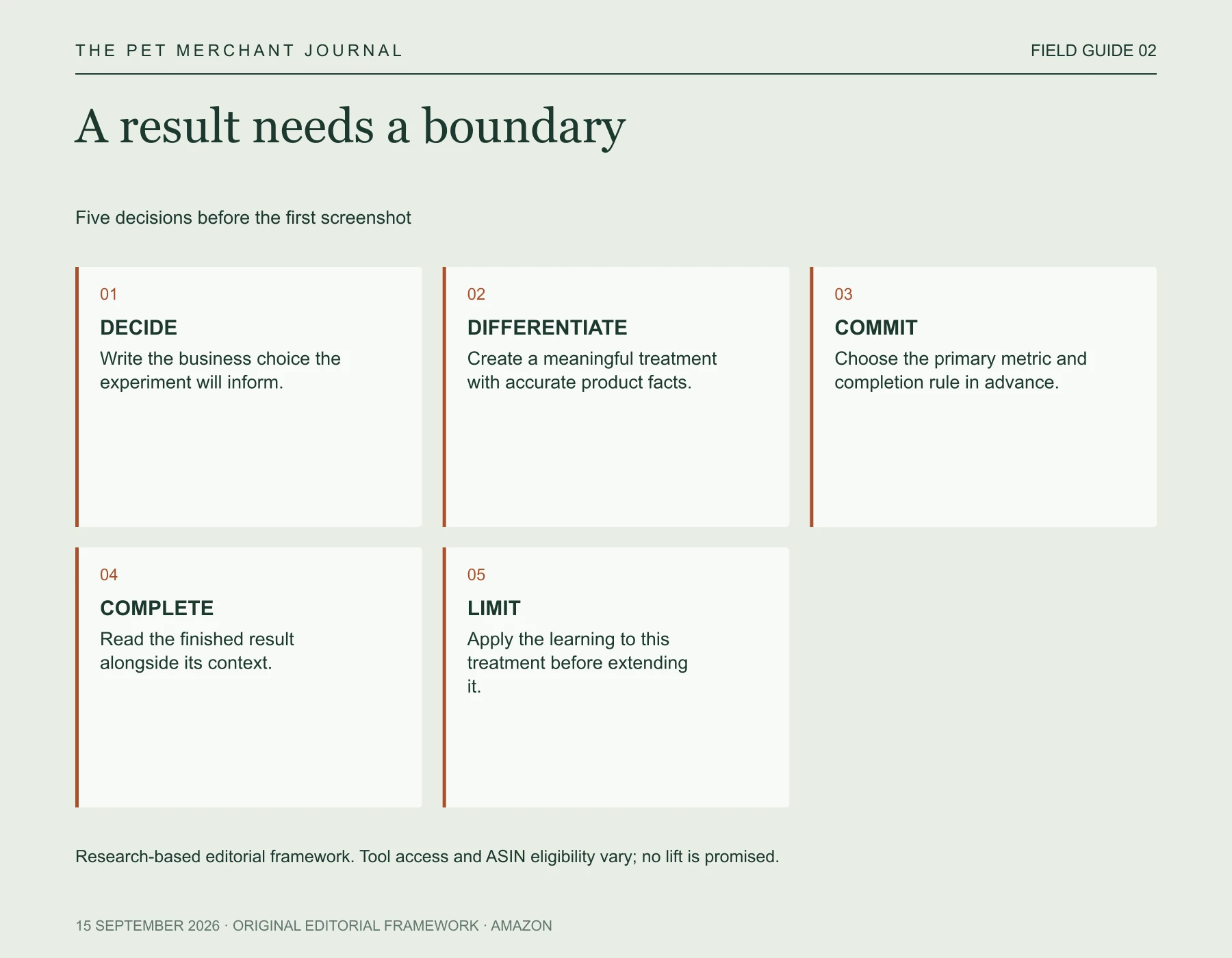
Original editorial framework. Research-based editorial framework. Tool access and ASIN eligibility vary; no lift is promised.
Here is a compact experiment brief a pet merchant can reuse:
| Field | Harness example |
|---|---|
| Decision | Keep the current opening or adopt the fastening explanation |
| Hypothesis | Clearer setup information improves the chosen purchase metric |
| Treatment | Replace the opening A+ explanation; keep verified product facts consistent |
| Primary metric | Choose one available purchase metric before launch |
| Completion rule | Use the selected platform duration or completion setting |
| Interpretation boundary | This SKU and treatment; no automatic catalog-wide conclusion |
Let the experiment finish, then read the whole result.
Wait for the selected completion point, even when the early result looks promising. Amazon’s workflow includes a “to significance” duration option and an automatic publishing setting; review these settings deliberately before launch. The results page reports several measures and the probability that one version performs better.
Choose the main decision metric in advance so the team cannot simply select whichever number looks best afterward. Review the other reported measures for context, including sample size. A larger order count, viewed without the number of visitors exposed, can invite the wrong comparison.
Avoid inventing a universal confidence threshold or sample size for every store. Use the platform's completed result and understand what it reports. A projection of future sales is a planning estimate, not booked revenue.
Record what happened around the test.
Keep a short log of stock availability, price changes, promotions, and unusual events. Randomized concurrent testing is different from replacing content this month and comparing it with last month. The latter also changes the time period and may change the shoppers arriving.
Context still matters when deciding whether a result should guide the next season or another product. A harness explanation tested during a promotion may deserve a narrower rollout than a new permanent design standard.
When the evidence is inconclusive, record that outcome. You may still prefer one version because it explains the product better or costs less to maintain. Call that an editorial or operational decision. Do not manufacture a measured lift to justify it.
Low-traffic products need particular patience. If an ASIN is ineligible, interviews and comprehension reviews can reveal misunderstandings, but they do not replace a randomized sales experiment.
The most valuable output is often a sharper next question. If setup information wins for this harness, would a clearer setup explanation help another complicated product? That is a new hypothesis, ready for another test.
Keep the screenshot. Wait for the result. Write down exactly what it allows you to believe.