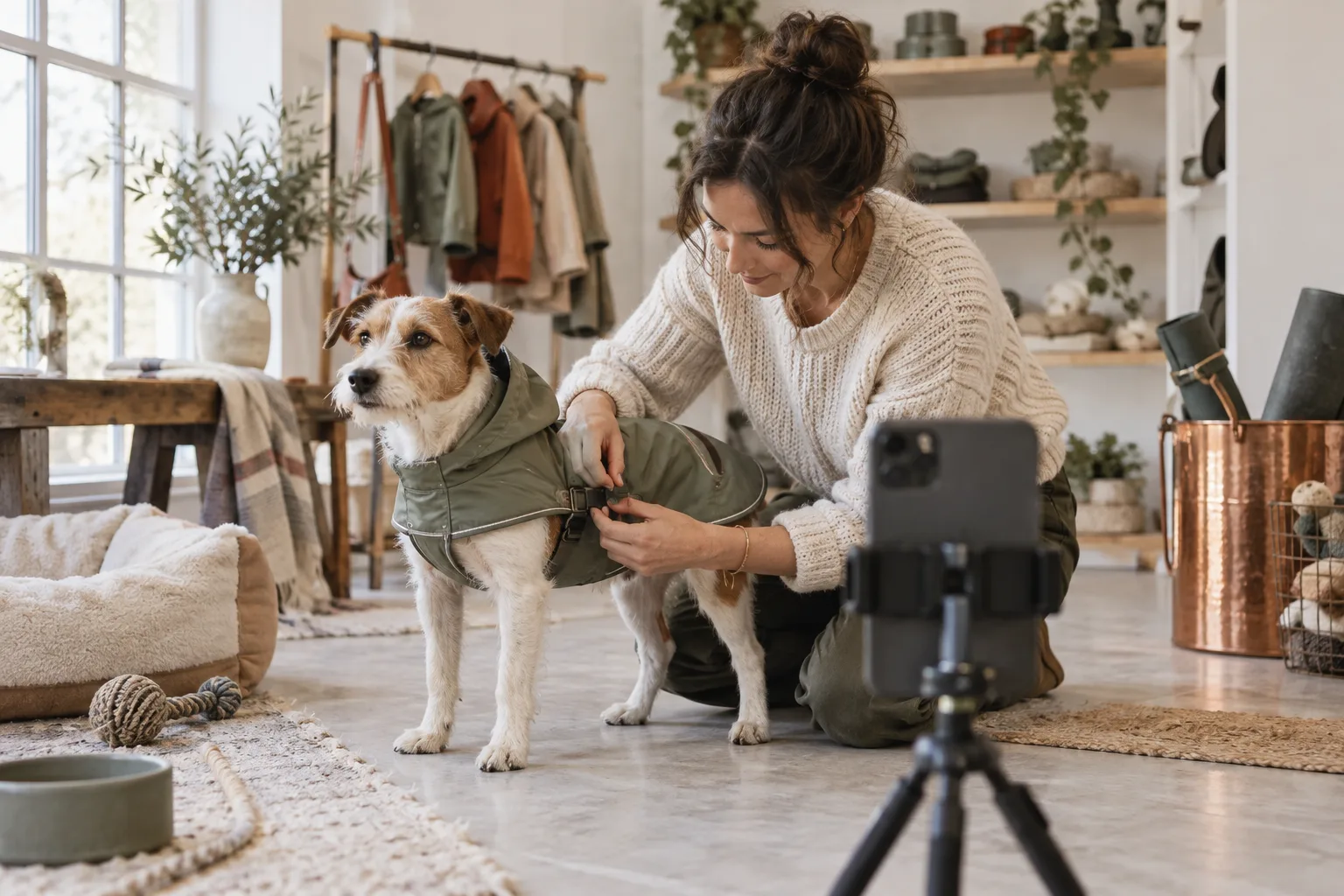
A dog walks into frame wearing a beautiful coat. The camera moves. The music swells. The coat changes color three times.
At the end, a prospective customer still cannot tell whether their existing harness will work underneath it.
That is an expensive thing to leave unanswered, even when the video was inexpensive to make. The merchant has created attention around the product without giving the interested viewer a clear next step.
For a shoppable video, start with a question that can be answered on camera. Give the viewer one moment they can inspect with their own eyes. Then build the edit around that moment.
TikTok Shop's current US content guidance emphasizes close-ups, clear product information, and original presentation. It also cautions against videos built around still frames or scrolling images. That supports a useful creative starting point: make a small piece of original footage do real explanatory work.
Choose the question before the hook
Consider a fictional SKU: a sage dog raincoat with an opening intended to provide access to a harness worn underneath. Assume those details have been confirmed on the physical sample and product page. The harness is sold separately.
The tempting hook is “Your dog's next favorite outfit.” It gives almost any dog owner a reason to smile. It gives very few of them a reason to investigate this particular coat.
Try a more useful opening: “Where does the leash go when the harness is under the coat?”
Now the subject of the video, the close-up, and the shopper's next question all agree. We can show the opening, explain what is being demonstrated, and send an interested shopper to check the coat's dimensions and their harness arrangement.
This is a creative hypothesis to test, not a claim that practical hooks always outperform charming ones.
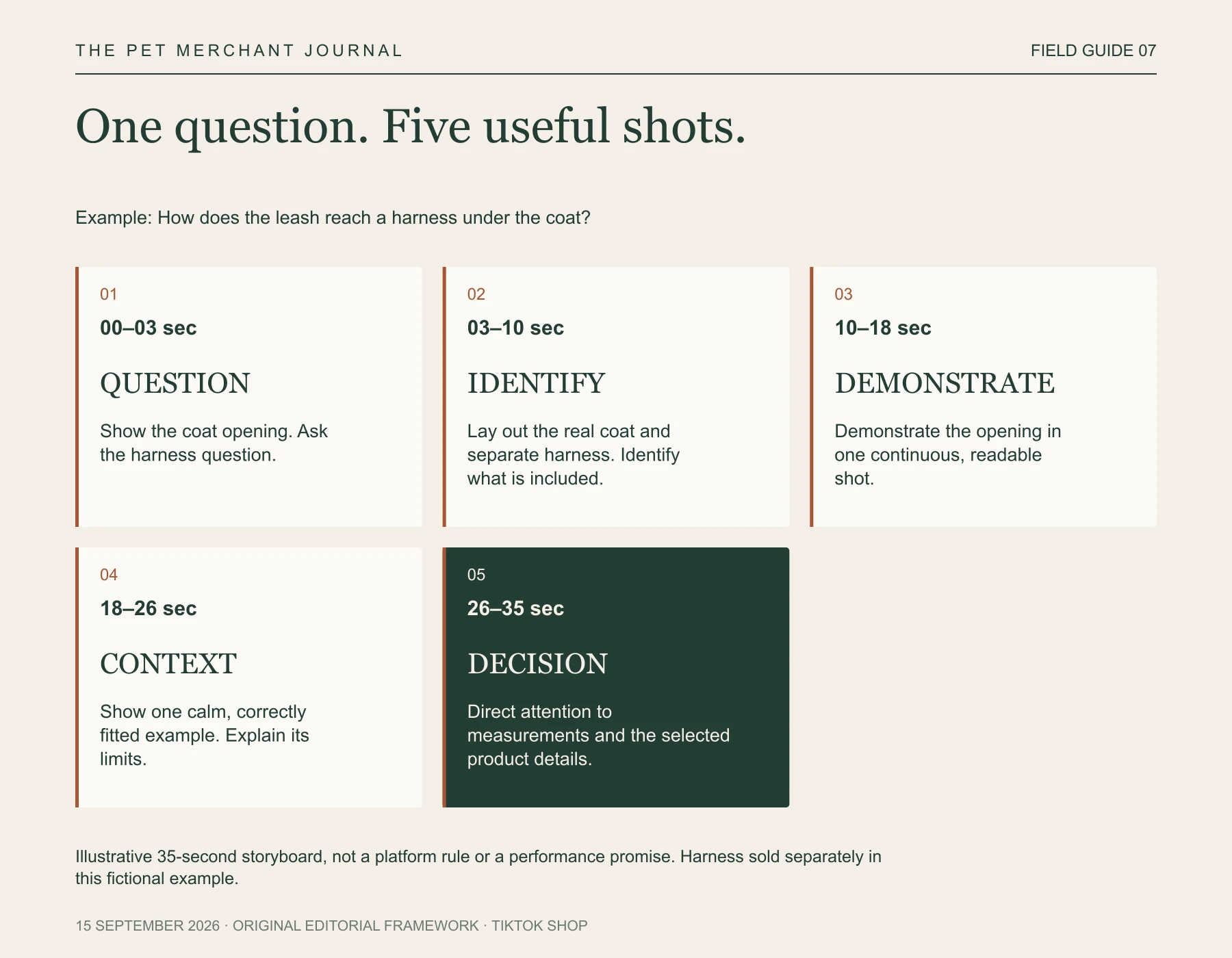
Original editorial framework. Illustrative 35-second storyboard, not a platform rule or a performance promise. Harness sold separately in this fictional example.
Build a 35-second demonstration
The following timing is an example production plan, not a platform rule.
Seconds 0–3: Show the coat and ask the harness question. Keep the relevant opening visible. A viewer should understand the subject with the sound off, using a short, accurate caption.
Seconds 3–10: Place the actual coat and harness on a clean table. Show which item is included in the offer. Keep the explanation in the merchant's own ordinary voice; it does not need a dramatic announcer.
Seconds 10–18: Demonstrate the opening on the physical sample. Give the mechanism a continuous shot long enough to follow. Avoid a transition that hides the part the shopper came to understand.
Seconds 18–26: If the dog is comfortable participating, show the correctly fitted example under calm supervision. Explain that this is one demonstrated combination. Do not imply universal compatibility from one pet and one harness.
Seconds 26–35: Show the relevant measurement guidance and invite viewers to check the selected size and product details. State that the harness is separate. End after the useful information has landed.
Cut dead time. Improve lighting. Record clean audio. Let the close-up remain readable. Those are valuable editing decisions because they make the evidence easier to inspect.
Keep synthetic scenes out of the evidence
An imagined rainy street might help a team choose a campaign mood. It cannot show whether this garment opening aligns with an actual harness, or establish rain protection. Those questions require the real product and appropriate supporting information.
TikTok Shop's US creator guide prohibits AI representations that change the product or mislead buyers about what is sold, and calls for disclosure of AI use in applicable content. A label does not make an invented product function accurate.
That distinction also guides how we think about our project, Tufty: any AI pet styling concept should earn its place as a concept, with physical product evidence doing the work of substantiating the offer.
Read the result beyond retention
Watch time can help reveal where the explanation loses people. It cannot tell you, by itself, whether those people were interested in buying the coat.
Read it alongside available product clicks, orders, and the substance of the questions people ask. “Does it work with a front-clip harness?” is a different signal from “Cute dog.” Neither comment guarantees a sale, but the first identifies the next piece of useful content.
Entertainment still matters. A warm opening or an amusing dog can make a factual demonstration more watchable. The discipline is to preserve the buying answer as the creative treatment becomes more ambitious.
For your next video, write one sentence before opening the editor: “After watching, a suitable buyer will understand ___.”
Then film the part that proves it.