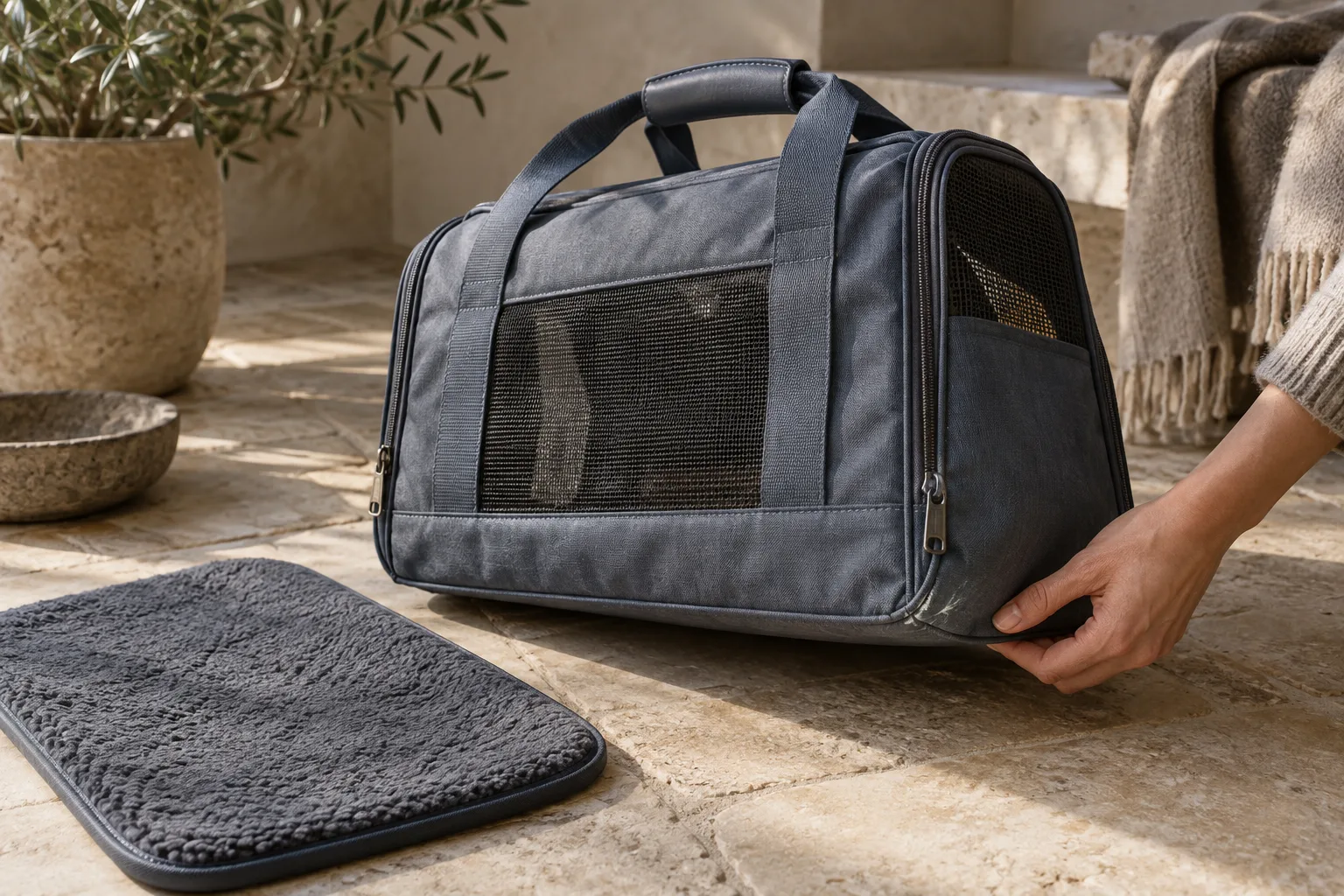
A polished catalog photograph tells you what a pet carrier looked like when it left the design studio.
A close-up of a worn corner tells you what this carrier looks like now.
For a merchant selling an individual used item, the second photograph can answer the more important question. The buyer is choosing the unit that will arrive at their door, with its present condition and its actual included parts.
That is a useful way to think about eBay content: build a clear account of the specific offer. A brand campaign may create interest, but it cannot explain a missing shoulder strap.
eBay's picture policy requires images to represent the item accurately and prohibits stock photos for used, damaged, or defective items. It also disallows added text or artwork, borders, and watermarks. Those rules make straightforward product photography especially valuable.
Photograph the transaction
Consider a fictional example: a used, slate-colored soft pet carrier with a removable base pad. It has a small exterior scuff near one lower corner. The original shoulder strap is missing. This is an illustrative listing exercise, not a report about a customer or an item we have sold.
The merchant's first job is to establish the offer in plain language: one carrier with its removable base pad, no shoulder strap, and the described wear. Photograph that set of included items together on a quiet surface.
Keep attractive props outside the frame. A coordinating leash may make a lovely scene, but the buyer should not have to decide whether it is part of the bundle. In this context, simplicity is a way of making the transaction legible.
Then make the gallery progress through four questions.
What am I buying? Show the whole carrier from a clear angle, with enough light to distinguish the material, handles, openings, and shape.
What comes with it? Lay the base pad beside the carrier. Show any other included components individually. List exclusions in the description, especially parts a buyer could reasonably expect from the original product.
What condition is it in? Photograph the exterior scuff in context, then closer. Add views of the interior, base, mesh, seams, and zipper. Inspect the actual item before describing any component as functional; a photograph alone does not demonstrate that a zipper operates correctly.
What are its relevant dimensions? Record the dimensions carefully and explain what was measured. Do not let a small pet posed nearby act as a substitute for measurements, or imply that a particular animal will fit comfortably.
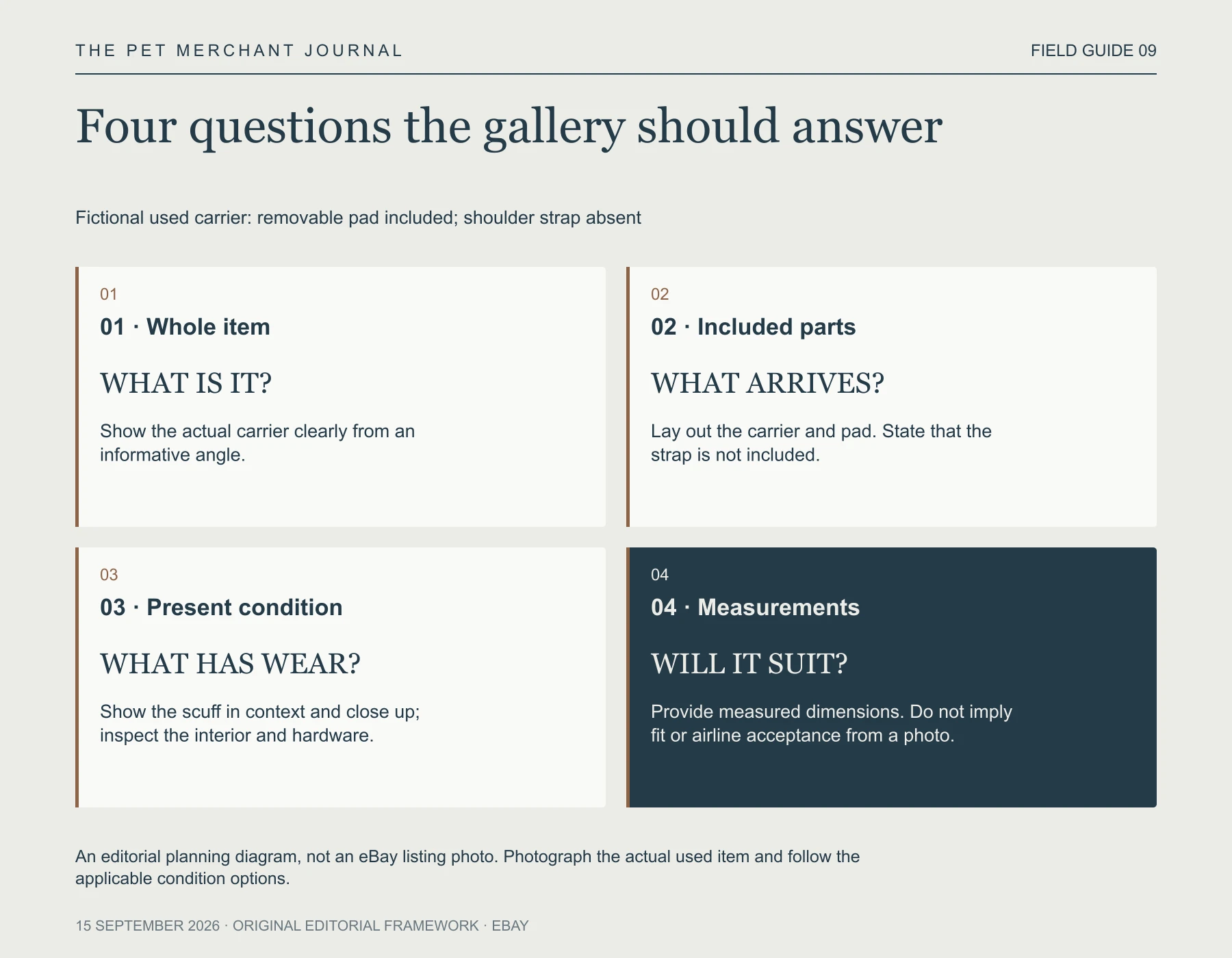
Original editorial framework. An editorial planning diagram, not an eBay listing photo. Photograph the actual used item and follow the applicable condition options.
Make the written description agree
A sentence such as “Great condition, see photos” transfers the interpretation to the customer. Instead, describe the observed detail: “Small surface scuff on the lower exterior corner, shown in the close-up. Removable base pad included. Shoulder strap not included.”
Use that wording only when it accurately describes the inspected item. Do not describe unseen areas as spotless or assume that a part works because it looks intact.
Condition labels require the same care. eBay's available condition options depend on the category; its Pet Supplies guidance distinguishes new items from previously used ones and directs sellers to describe imperfections. Choose the applicable listing option and make the narrative consistent with it.
Also avoid turning dimensions into an unsupported promise. A carrier's size does not, by itself, establish acceptance by an airline. If your offer discusses compatibility, verify the relevant requirements and the basis for the claim. Otherwise, provide the measurements and construction details without inventing an approval.
Keep editing in service of inspection
Clean lighting, accurate color, a steady camera, and careful cropping can make condition easier to assess. Removing the scuff digitally changes the evidence the buyer needs. So does replacing the used carrier with a synthetic version whose seams, pad, or mesh appear different.
For this offer, the most sophisticated visual decision may be leaving an imperfection plainly visible.
That does not mean every eBay pet merchant needs to document every new, identical unit as though it were a unique secondhand item. New inventory has a different operating context, and suitable catalog assets can have a role when accurate and permitted. The discipline is to match the photography to the condition and specificity of the offer.
Close the loop before dispatch
For the fictional carrier, give the photographed unit a clear internal stock reference. When it sells, check the physical carrier and included pad against the listing before packing. This is a practical handling suggestion, not an eBay rule: good photography loses its value if the warehouse sends a different set of parts.
Save the time spent debating whether the scuff looks attractive. Spend it making sure the buyer can find it, understand it, and decide whether the offer suits them.
A strong listing allows an unsuitable buyer to pass and a suitable buyer to proceed with fewer unanswered questions. On eBay, that is a serious creative achievement.